
Best Motorcycles for Two Riders: A Two-Up Riding Guide
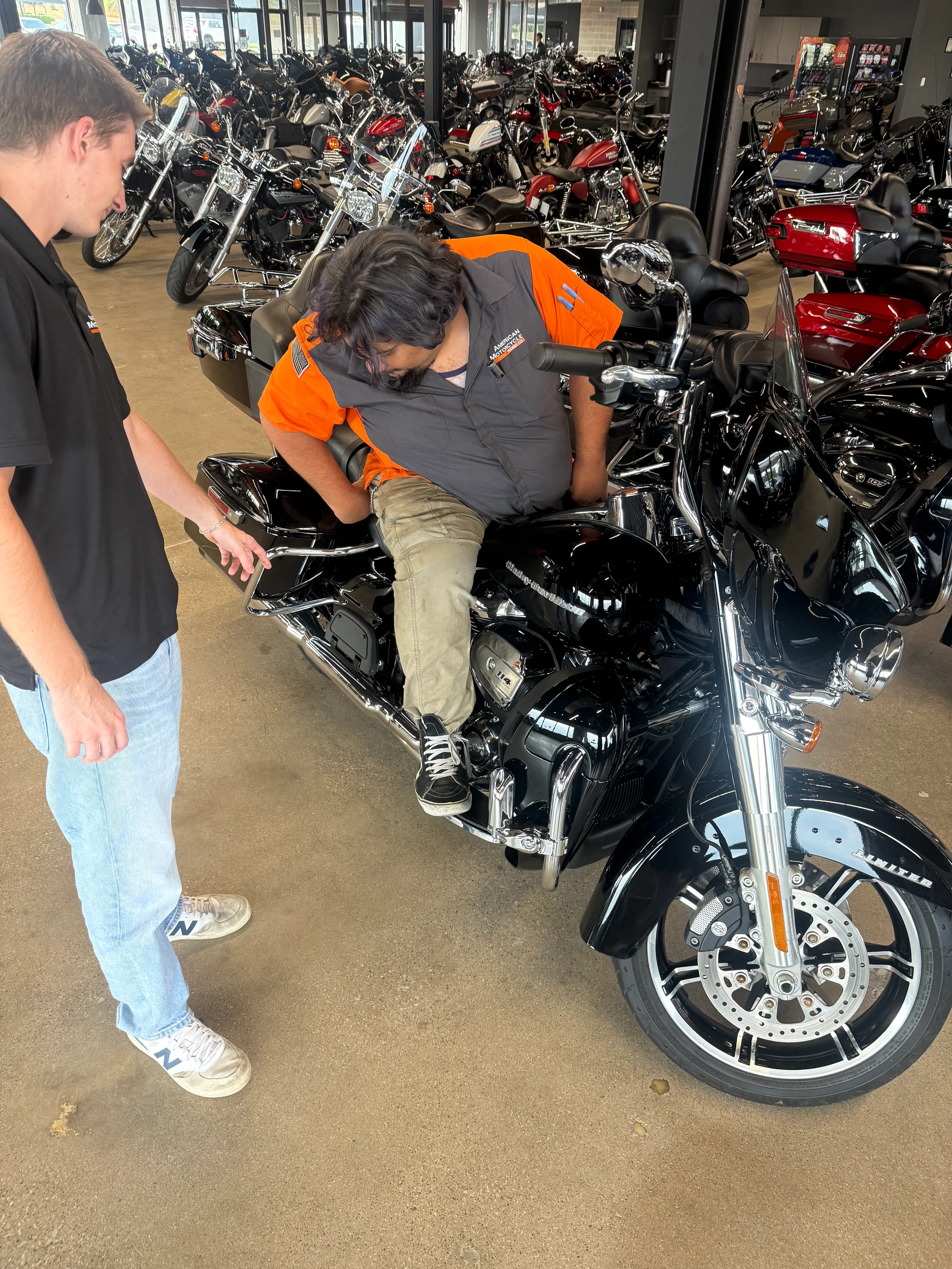
Riding Double: Which Motorcycles Will Work Best For Two Riders?
There's something genuinely special about sharing a ride. Whether you're cruising down the Gulf Coast with a partner, heading to a weekend rally with a friend, or giving your grown kid their first taste of the open road, two-up riding is one of motorcycling's great pleasures—provided you're on the right bike. Throw a passenger on the wrong machine, and suddenly that pleasure turns into a white-knuckle exercise in poor ergonomics, strained suspension, and mutual misery.
So, what motorcycle is best for two people? The honest answer is: it depends on where you're going, how far, and who's riding with you. But there are clear winners, and this guide will walk you through exactly what to look for—and which used motorcycles consistently rise to the top when a second rider climbs on.
How We Chose These Bikes
Not every motorcycle is built with a passenger in mind, even if it technically has a seat for one. To make this list, each bike had to check several boxes:
- Seat comfort for the passenger — size, padding, and position matter enormously on longer rides
- Grab rails or a backrest — a passenger needs something to hold onto that isn't the rider's kidneys
- Suspension capable of handling the added weight — soft springs that sag under load create dangerous handling
- Power sufficient for two riders — what feels effortless solo can feel sluggish with an extra 150–200 lbs aboard
- Luggage capacity — real-world touring means carrying gear for two
- Ergonomics that work for both riders — footpeg placement, handlebar reach, and wind protection all affect how comfortable the passenger feels over miles
With those criteria locked in, here are the motorcycles that genuinely excel at the job.
Top Motorcycles for Two Riders
- Harley-Davidson Road Glide / Street Glide — The Gold Standard for Touring Pairs
If you're shopping for a used motorcycle and want the definitive two-up touring experience, a touring-class Harley-Davidson is hard to argue against.
Passenger Seat: Wide, heavily padded, and positioned low relative to the rider's seat—giving the passenger a comfortable perch with good sightlines. Many come from the factory or aftermarket with passenger backrests that make all-day riding genuinely comfortable.
Grab Rails/Backrest: Both the Road Glide and Street Glide offer integrated passenger grab rails, and the optional Tour-Pak luggage case doubles as a full backrest. This is arguably the most passenger-friendly seating arrangement on any production motorcycle.
Suspension: Harley's Emulsion rear shocks are serviceable but benefit from a preload adjustment when carrying a passenger. Many owners upgrade to aftermarket units. The front end is stiff enough to handle the extra weight without drama.
Luggage: Hard saddlebags come standard, with the option to add a Tour-Pak top case. You can comfortably carry gear for a week-long trip for two riders.
Price Range: Used examples in good condition typically run $12,000–$22,000 depending on year and mileage.
Best Suited For: Couples who take long highway trips, rally-goers, and anyone whose passenger comfort is the top priority.
- Honda Gold Wing — The Ultimate Two-Up Touring Machine
Ask any experienced touring rider what they'd choose for the perfect two-up trip and the Gold Wing comes up immediately. It's not a coincidence.
Passenger Seat: Enormous, deeply padded, and set higher than the rider's seat—which means the passenger has a commanding view and feels far less cramped than on sport or standard bikes. It's the closest thing to a first-class seat on two wheels.
Grab Rails/Backrest: A large integrated backrest is standard equipment. Passengers can genuinely lean back and relax. Grab handles are positioned naturally at hip level.
Suspension: The Gold Wing's front double wishbone suspension and rear Pro-Link setup are specifically engineered to handle the bike's considerable weight—and two riders. Handling stays composed and predictable even when loaded down.
Luggage: Standard hard saddlebags plus a top trunk give you more carrying capacity than many cars' back seats. Heated seat and grip options are available on higher trim levels.
Price Range: Used Gold Wings typically range from $10,000–$20,000 for recent models. Older examples can be found for under $8,000.
Best Suited For: Serious touring couples, those planning multi-day or cross-country rides, and passengers who prioritize comfort above everything else.
- Harley-Davidson Electra Glide / Ultra Classic — Two-Up Comfort With Character
A step into the full-dresser category, the Electra Glide adds a full fairing with lowers that protect both rider and passenger from wind, rain, and road debris.
Passenger Seat: Generously padded and wide. The standard fairing lowers on the Ultra Classic provide leg protection for the passenger, which is a significant comfort advantage on longer rides.
Grab Rails/Backrest: Integrated grab rails plus optional Tour-Pak create an almost armchair-like passenger experience. Foot floorboards (rather than pegs) reduce fatigue on long hauls.
Suspension: Factory suspension handles two riders well, though an adjustment of rear preload is recommended when consistently carrying a passenger.
Luggage: Hard bags plus Tour-Pak capacity—similar to the Road Glide/Street Glide setup. More than enough for a long weekend for two.
Price Range: Used models typically $11,000–$21,000.
Best Suited For: Riders who do serious mileage with a regular passenger and want the full weather protection of a dresser.
- BMW R 1250 RT — The European Touring Benchmark
If your two-up riding priorities lean toward precision handling and European engineering, the BMW R 1250 RT is one of the most capable bikes on this list.
Passenger Seat: Wide, well-padded, and adjustable. Passenger footpegs are positioned for a natural knee angle, which matters on long days.
Grab Rails/Backrest: Sturdy grab rails are integrated into the design. An optional passenger backrest is available.
Suspension: BMW's Telelever front and Paralever rear suspension setup is genuinely extraordinary for two-up riding—it separates braking forces from suspension compression, maintaining composure under hard braking with a passenger aboard.
Luggage: Integrated hard panniers plus an optional top case. The system is lockable, weatherproof, and well thought out.
Price Range: Used examples run $12,000–$18,000 for recent models.
Best Suited For: Riders who want a sporting edge to go with their touring comfort, or those doing a mix of highway miles and twisty roads.
- Kawasaki Vulcan 1700 Voyager — Value-Priced Touring With Full Features
For riders shopping with an eye on value, the Vulcan 1700 Voyager punches well above its price class in terms of two-up capability.
Passenger Seat: Plush, wide, and well-positioned with a standard passenger backrest.
Grab Rails/Backrest: Passenger backrest comes standard—a real differentiator at this price point.
Suspension: The 1700cc parallel-twin generates strong low-end torque that handles the extra load confidently. Rear suspension handles two riders without the sagging common on smaller-displacement bikes.
Luggage: Standard hard saddlebags plus a lockable trunk. Smaller than the Gold Wing's capacity but adequate for weekend trips.
Price Range: Used examples often found in the $7,000–$12,000 range.
Best Suited For: Budget-conscious buyers who want real touring capability, new riders stepping into their first two-up bike.
- Indian Chieftain / Pursuit — Modern Touring With Bold Style
Indian's flagship touring models have matured into serious two-up contenders that rival Harley's best.
Passenger Seat: Wide and padded with good support. The Pursuit in particular offers a comfortable passenger experience with its full fairing providing wind protection.
Grab Rails/Backrest: Rear grab rails and optional passenger backrest available on both models.
Suspension: Indian's rear air suspension (available on select trims) is adjustable for passenger weight, making it one of the most adaptable suspension setups on a production cruiser.
Luggage: Standard hard saddlebags plus optional trunk. The Pursuit's full fairing also provides excellent wind and weather protection for both riders.
Price Range: Used examples typically $14,000–$22,000.
Best Suited For: Riders who want a premium two-up experience with a more modern aesthetic than traditional Harley dressers.
What to Look for When Buying: A Short Buyer's Guide
When evaluating used motorcycles for two-up duty, go beyond the standard inspection checklist and focus on these passenger-specific factors:
Suspension Setup Always ask whether the rear suspension has been adjusted for regular two-up use. Bikes that have been ridden solo their whole lives will have softer spring preload settings. On adjustable shocks, you want the ability to dial in preload for the combined weight of both riders. If the bike uses air suspension, have the system inspected for leaks.
Communication Systems Long rides demand communication. Look for bikes with pre-wired audio systems or at least handlebar-mounted speaker provisions. Aftermarket Bluetooth intercom systems (Cardo, Sena) are the industry standard—many used bikes already have them installed. Being able to talk to your passenger without shouting at 70 mph transforms the experience.
Windscreen Coverage for the Passenger A full fairing changes the ride entirely for a passenger. Without wind protection, buffeting fatigue sets in fast. If the bike you're considering has a small or no windscreen, budget for an aftermarket solution. On full-dress tourers, check whether the windscreen is electrically adjustable and that the mechanism works properly.
Heated Seat Options If you plan to ride in cooler months—and in the South, that often means the best riding season—heated seats are a genuine quality-of-life upgrade for passengers, who generate less body heat than riders working the controls. Many touring bikes offer factory or dealer-installed heated seat options. Confirm whether the system is functional before purchase.
Safety Tips for Riding With a Passenger
Carrying a passenger changes how your motorcycle behaves in ways that can catch unprepared riders off guard. Here's what every two-up rider should understand before they roll out:
Weight Distribution Adding a passenger shifts the center of gravity rearward and upward. This affects steering response—the bike will feel slightly heavier in turns and require more deliberate inputs. Take the first few miles easy until you've recalibrated your instincts for the loaded feel.
Acceleration What felt effortless solo will feel noticeably slower with 150–200 additional pounds aboard. This is especially true on underpowered bikes. Plan your passing maneuvers more conservatively and don't count on the same burst of acceleration you're used to.
Braking Distance More weight means more momentum, and more momentum means significantly longer stopping distances—a physics reality that catches even experienced riders off guard the first time they ride two-up. At highway speeds, the difference can add 20–30 feet to your stopping distance compared to riding solo. That's enough to turn a close call into a collision if you haven't adjusted your habits.
Increase your following distance as a baseline rule—at minimum, add a full extra second to your usual gap, and two seconds is better on wet roads or in heavy traffic. Brake earlier and more progressively than you normally would. Hard, sudden braking with a passenger not only increases stopping distance but can throw your passenger forward into you, disrupting both of your balance and your control inputs at exactly the wrong moment.
Communication Before You Roll A passenger who doesn't know what to expect is a liability, not just an inconvenience. Before every ride—especially with someone who hasn't been on a motorcycle before—take five minutes on the ground to walk through the basics. It's not overcautious; it's what experienced two-up riders do every time.
Start with mounting and dismounting. The passenger always mounts after the rider has the bike stable and both feet planted, and always dismounts first before the rider. Getting this backward is how bikes get dropped in parking lots. Show your passenger where to put their feet—on the passenger pegs, not anywhere near the exhaust pipe—and make sure they understand to keep their feet there even when stopped.
Establish hand signals or a tap system. A double tap on your shoulder can mean "I need to stop soon." A squeeze can mean "slow down." Keep it simple—three signals is enough, and they need to be memorable in the moment, not just in the driveway. If you have an intercom system, even better, but don't rely on it exclusively; batteries die and connections drop.
Final Thoughts
The best two-up motorcycle is ultimately the one that makes both riders want to keep going. Passenger comfort isn't an afterthought—it's the difference between a ride your partner remembers fondly and one they politely decline next time.
Whether you're drawn to the classic American touring experience of a Harley dresser, the unmatched comfort of a Gold Wing, or the precision of a BMW RT, there's never been a better time to find the right machine. The used motorcycle market is full of well-maintained touring bikes from riders who upgraded or moved on—meaning you can access incredible two-up capability without paying new-bike prices.
ABOUT THE AUTHOR

Jake Robison

Jake Robison has operated powersports dealerships since 2003. With an extensive background in the motorcycle industry including sales, service, parts, finance, management and powersports training, he covers all things motorcycles and enjoys sharing valuable information to newcomers on two-wheels