
A Motorcycle for the Apocalypse: How Motorcycles Can Be Converted for Survival Scenarios
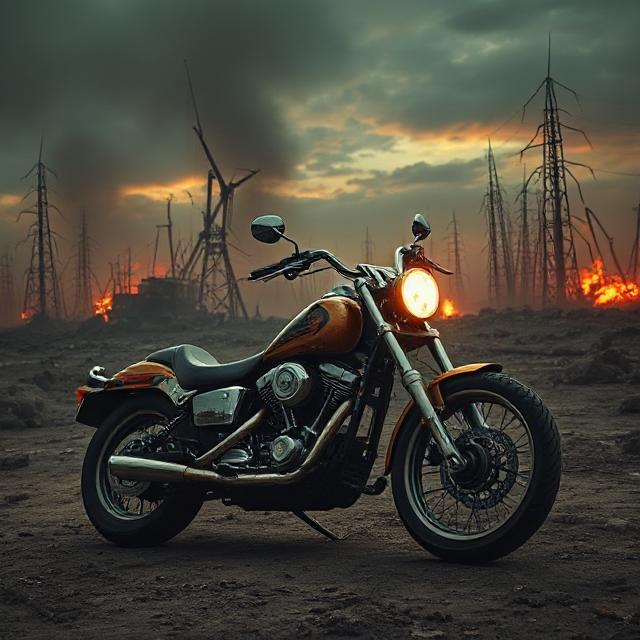
A Motorcycle for the Apocalypse: How Motorcycles Can Be Converted for Survival Scenarios
Do you get the feeling that life as we know it may not hold out for much longer? If so, you’re not alone. Millions of people suspect that something widespread and unpleasant is lurking just over the horizon. Almost half of Americans believe that we’re living in the end times, and an estimated 30 percent feel that some type of apocalypse, whether biblical or otherwise, is imminent.
Is An Apocalypse Looming in Our Near Future?
We don’t know exactly when an apocalypse might happen. Some people insist that a disaster of global proportions won’t take place until far in the future. Still, many believers are fairly certain that it’s going to happen during our lifetime.
We don’t really know how it’s going to happen, either. In light of ongoing climate change, quite a few people think it’ll revolve around natural disasters. With political turmoil continually escalating, World War III could bring about the collapse of not only the human race but also the planet we call home.
Society’s destruction may stem from a deadly pandemic. Considering the scientific community’s ongoing work with genetic manipulation, a zombie apocalypse may not be as far-fetched as many people would like to believe. On the other hand, our downfall may come at the hands of an unprecedented solar flare or an asteroid strike.
Getting Ready for the Inevitable
No matter when or how the apocalypse unfolds, being prepared ahead of time is going to be the key to survival. Building a nice stockpile of bottled water, freeze-dried and dehydrated foods, medical supplies, and other essentials is a great start. You’ll also need to be able to travel at times, though. For that, a motorcycle could be your saving grace.
No vehicle is a perfect solution in a survival scenario. Cars, trucks, vans, and SUVs give you plenty of cargo space and protection against the elements and other dangers. They’re not very maneuverable, though. With a motorcycle, you sacrifice that added protection and cargo capacity, but you’re a smaller target, and you gain speed, maneuverability, and fuel efficiency. Making certain motorcycle modifications will allow you to build on those strengths and give yourself some extra advantages.
Increasing Storage Capacity
One of the simplest and most important modifications you can make to a bike to get it survival ready is adding more storage capacity. Standard saddlebags will suffice, but you may want to
take things to the next level and install hard-shell side cases. They’re more durable, and they’ll protect your essential gear better.
Locking versions give you even more security. They may not completely thwart determined thieves, but they’ll at least make them work harder. That could give you more time to catch them in the act and stop them.
That said, typical side cases aren’t necessarily mobile on their own. They’re not designed to be carried, and you can’t simply detach them and take off if you need to abandon the bike. Detachable tail, tank, and handlebar bags are generally easier to remove and carry. As such, you may want to add them to the mix. Equipping yourself with a fully stocked backpack that serves as a bug-out bag is a good idea too.
While maximizing storage capacity is crucial, there’s another angle to think about. Adding storage makes the bike bulkier and heavier. That, in turn, detracts from its maneuverability, aerodynamics, and fuel efficiency. Think carefully about how much extra storage you truly need, and try to find a nice balance here.
Extending Your Range
You may need to extend the range of the bike as well. Though motorcycles are exceptionally fuel efficient, their gas tanks are notoriously small. At the same time, in a survival scenario, fuel may be in short supply. You may not be able to stop at a gas station to refuel whenever the need arises. Instead, you might want to give the bike the ability to go farther on a tank of fuel and find ways to carry extra gas along with you.
If your motorcycle has an exceptionally small fuel tank, consider swapping it out for a larger one. From there, several mechanical measures can improve a bike’s gas mileage. You can adjust your gear ratios or adjust the carburetor to get a better air/fuel mix. You might upgrade to ceramic-coated pistons and cylinders to reduce engine friction. Installing a high-performance intake and air filter may also make a positive difference in your fuel efficiency.
Those are only a few ways to get more gas mileage out of a motorcycle. Some of those projects can get very involved and expensive. Some survival experts recommend simply carrying extra cans of fuel on your bike while traveling. That’s not a bad idea, but it’ll add more weight.
Besides that, having containers of sloshing liquid on hand while you’re on the move can definitely make a bike more difficult to control. If a rogue spark or a bullet happens to hit your fuel cache, you’ll have an entirely new set of problems to worry about. Again, it’s a matter of balance.
Portable Power Stations
In any survival scenario, no matter how you’re traveling, a portable power station can be a lifesaver. It’ll give you a way to jump start the bike if need be. It’ll also give you power for any
number of other devices or appliances, like a portable water heater or water filtration system. Power stations have built-in lights as well, which can certainly come in handy. Their integral air compressors are sure to be helpful for dealing with flat tires as well.
Depending on the situation, though, you may not have access to electricity to be able to keep a power station charged. With that being the case, choosing one with a solar recharging option is recommended. Alternatively, you could arm yourself with a portable solar panel to connect to the power station. That way, unless the sun goes out, you’ll be able to stay charged.
Obviously, the most versatile power stations tend to be bigger and bulkier. They may take up a great deal of space in your side cases that could be used for other essentials. As such, you may want to install a rack on the back of your bike and secure the power station to it using ratchet straps or bungee cords. You could also weld a dedicated mount for the power station onto the bike.
Keeping Stealth in Mind
In an apocalyptic situation, you don’t really want to stand out any more than absolutely necessary. After all, the more visible you are, the more likely you are to be targeted. That’s especially true if you’re on a well-stocked, fully equipped motorcycle.
With that in mind, one of the modifications you could make to a survival motorcycle is making it less visible. Paint it matte black, dark green, or brown, or give it a camo paint job. Follow that color scheme with all of your added bags, cases, gas cans, and other storage solutions. That’ll make it easier to hide from those who mean to do you harm or take what’s rightfully yours.
Some people go so far as to suggest installing a quieter exhaust system to keep people from hearing you coming. Unfortunately, that could hamper your fuel efficiency without really making much of a difference in the sound of the bike. Motorcycles are naturally loud, and there’s no real way to make them silent, so a modification like that may not be worth the time, effort, and cost.
Beefed-Up Suspension and Off-Road Tires
After a major disaster, roads may be impassible because of traffic congestion or serious damage. Depending on the situation, taking well-traveled roads may not be the safest option anyway. As such, you may want to modify your bike for off-roading.
Dual-sport and adventure bikes are made for both paved roads and veering off of the beaten path. You may want to take things a bit further, though. Consider installing beefed-up suspension to make your motorcycle more capable of handling rough ground, rocks, roots, ruts, and other off-road obstacles. Installing all-terrain tires, or at least having them on hand in case you need them, can also make it easier to travel beyond paved roads when needed.
Compartments for Parts and Tools
Another modification you can make is adding compartments for tools and spare parts. Be sure you have all the portable tools you might need to work on your specific bike. Some bikes have built-in, frame-mounted spaces for tool kits under their seats, but you may want to expand on what comes from the factory.
Though you can’t take along every possible spare part you might need, certain pieces are essential. Those might include chains, belts, brake pads, fuel lines, tire tubes, and patches. Don’t poke fun at the importance of duct tape, either. Think about the smaller, more portable items that are most crucial for keeping the bike running, even if if it’s only for long enough to get out of danger or back to home base.
What About Electric Motorcycles?
Quite a few people feel that electric motorcycles and scooters are fantastic alternatives to traditional bikes. After all, they don’t run on gas, so they’d be perfect for situations where fuel isn’t readily available. They’re also a lot quieter, which is helpful if you’re aiming for stealth.
Having said that, they’re not necessarily better for survival scenarios. Keep in mind that these bikes have limited range. Since electricity may not be any more readily available than fuel, keeping them charged could be a problem. Even if you have a portable solar power station, an electric motorcycle could quickly drain away power you may need for other things.
Electric motorcycles also rely heavily on electronics, which could cause major issues in an apocalypse. Parts aren’t as easy to find for them, either. Along that same line of reasoning, they’re not as easy to repair as internal combustion motorcycles, especially the older models.
Exploring Other Motorcycle Modifications for Survival Situations
Any number of modifications can be made to a motorcycle to transform it into a survival tool. You can essentially take a project like this as far as you want. If you want to go beyond the general changes we’ve already covered, the following options may be right up your alley.
● Infrared or Thermal Cameras - Installing a thermal or infrared camera on your motorcycle can allow you to travel at night without your headlights. That’ll make you less visible. It can also give you a way to watch your surroundings in the dark even when you’re stationary. Vigilance is crucial.
● Gun and Ammo Mounts - Adding mounts for guns and extra ammo cases to your bike is also a good idea. It’ll give you a way to keep your firearms close at hand when you’re on the move. It’ll be helpful for hunting as well. Some preppers even take things a step further and mount turrets on their motorcycles.
● Auxiliary Fuel Tanks - In addition to, or as an alternative to, installing a larger fuel tank or carrying extra fuel, you could install an auxiliary gas tank on your motorcycle. Run fuel lines directly to it, and install a manual switch so you can swap over to it when needed.
● Winches - Installing a relatively small winch, like one designed for an ATV, might be a good idea too. You can use it to pull obstacles out of your way or drag your bike out of sticky situations. Though a motorcycle isn’t heavy enough to pull seriously heavy loads, a winch could definitely make a difference.
Some projects are more complicated and expensive than others. Certain alterations mean making significant, irreversible changes to your motorcycle as well. Consider how far you’re willing to take it and whether you’re building a survival bike or simply ramping up the one you regularly ride.
Where the Biker and Prepper Communities Come Together
When you really think about it, the biker and prepper communities have a lot of common ground. Both fully understand the value of being mobile and self-sufficient. They also know how important it is to be prepared for the unexpected.
Members of both communities tend to be experts at packing as many essentials as possible into the smallest of spaces as well. On that note, bikers and survivalists can also live comfortably on minimal luxuries. Neither has a problem with taking off at a moment’s notice, either. If a situation gets dicey, both bikers and survivalists are perfectly capable of stepping out on their own and taking care of themselves and their loved ones.
Being Prepared for What’s to Come
An apocalypse is coming. It’s not a question of if; it’s a question of when. Though there’s no way to plan for every possibility, it’s certainly possible to prepare to face the unexpected head-on. Since motorcycles are small, light, fast, fuel efficient, and highly maneuverable, they’re particularly suited to survival situations.
You can modify a motorcycle in countless ways to make it an effective survival tool. If you’re modifying a bike specifically for an apocalyptic situation, the possibilities are unlimited. Just remember that the more you add to a bike, the heavier, bulkier, more difficult to control, and less fuel efficient it will be.
On the other hand, you don’t have to go all-out with a project like this. Some of the measures listed here are practical even for everyday riding, and they won’t drastically change your bike’s appearance. Whether you take a minimalistic approach or an extreme one, stay safe and do what you can to be prepared for what’s to come.
ABOUT THE AUTHOR

Jake Robison

Jake Robison has operated powersports dealerships since 2003. With an extensive background in the motorcycle industry including sales, service, parts, finance, management and powersports training, he covers all things motorcycles and enjoys sharing valuable information to newcomers on two-wheels